


From the Archive: A Day at UCSB
Earlier this month, Lance and I spent a Friday morning with Ian Evans at the University of California, Santa Barbara, in the Library’s Special Research Collections. Ian is a preservationist there. (Thank you, Ian, for showing us around!) He took us through the reading room, the conservation and audio labs, the cold vault, and the stacks so we could see what the archive staff has been working on.
Through our partnership with UCSB, we catalog, preserve, and publish recordings we digitize in collectors’ homes, all for free, on the Discography of American Historical Recordings (DAHR), a database of over 460,000 master recordings made by American record companies during the 78rpm era. That morning, Ian checked the numbers: more than 10,471 recordings from our partnership are now online and free for anyone to listen to.


Our worlds are pretty different. At Dust-to-Digital, it is mainly Lance and me working on our projects and initiatives. At UCSB, there is a team and space dedicated to every department, from storage and processing to research and public programs, all under one roof. But Ian pointed out the flip side of having so many resources: a big university cannot always move fast. We can. For this partnership, we work directly with collectors to locate and digitize rare recordings, often in places a university might not easily reach. UCSB brings the expertise, infrastructure, and long-term stewardship needed to preserve those recordings and make them accessible to everyone. Both are needed.
I keep thinking about the enthusiasm of everyone we met. Like Eric Ederer, who was in the Henri Temianka Audio Preservation Lab transferring 78s from a collection of small Los Angeles labels, including a Class Records test pressing of “Rockin’ Robin” by Bobby Day. Eric works through about twelve records an hour. In total, he has transferred around 4,500 recordings this year. Each disc is checked against the database, barcoded, and photographed, and that barcode links the physical disc to every audio and image file made from it. Another example of how each person at the DAHR has a unique job, but they are all working toward one goal: preserving and sharing music. That is an archive’s true purpose.
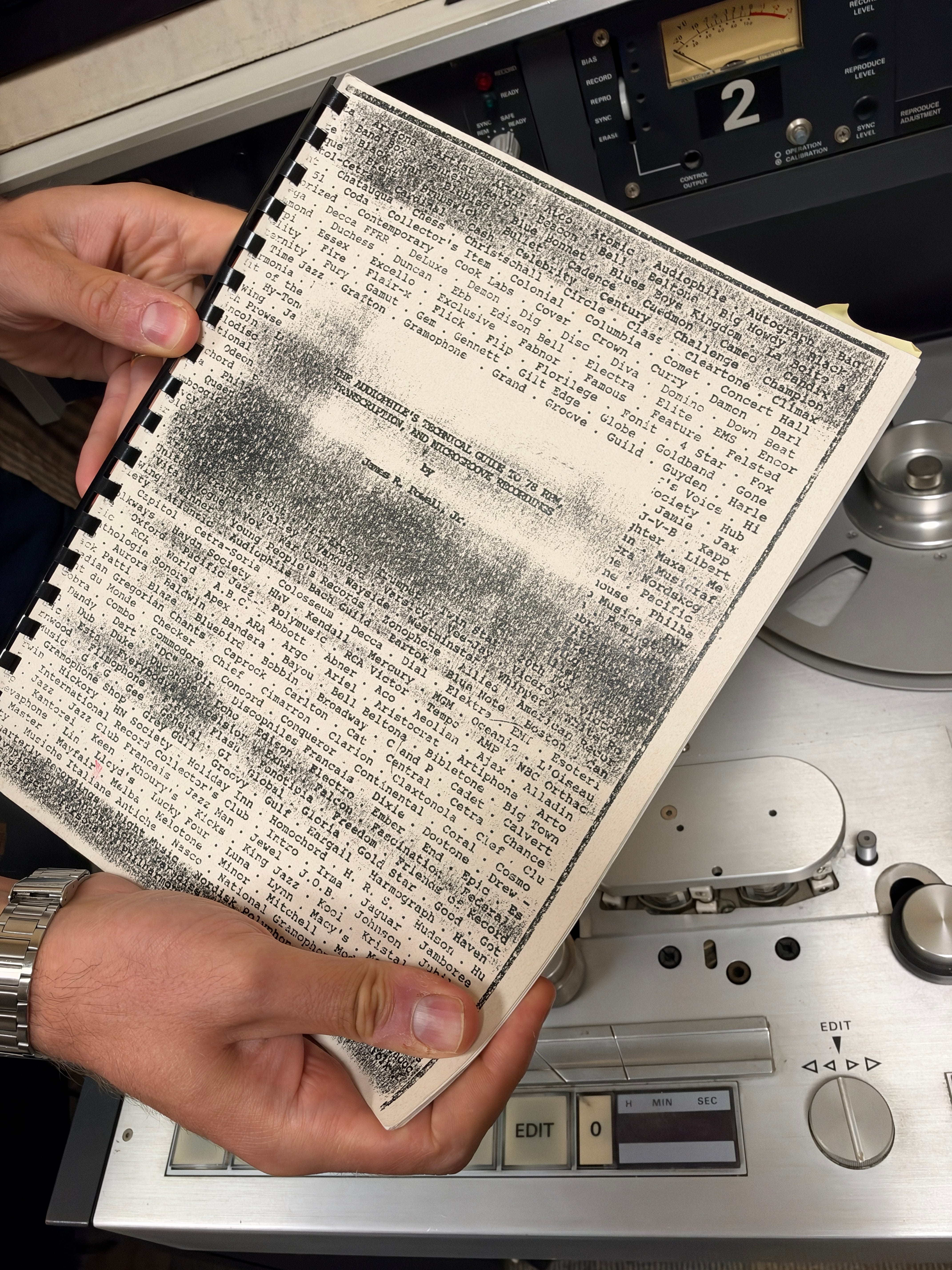
Fran Smith, an associate editor for the DAHR, oversees the student workers who enter metadata. Although she is always a friendly face at the archive, she is serious about the methodology for taking the detailed information from any given recording and translating it into a single, searchable record. The students work from the Victor company ledgers and old issue cards, deciphering handwriting more than a hundred years old. When sources disagree, they follow a hierarchy (the disc label first, then the ledgers) and leave a note so the next person knows.
The students come from a wide variety of backgrounds, and that variety really helps enrich the archive. Grace is a piano major (Fran said she is especially helpful with the classical recordings); Stella was tracking down the performers on a children’s album by Spike Jones that listed them only by first initial and last name.
The detailed work that Fran performs and oversees is incredibly valuable. Metadata is the entry point when people find what they are looking for. Without it, the files are inaccessible. A methodical, repeatable approach is essential to creating that access. In a way, a collection like this lives and breathes through its metadata, and it is always evolving. Once you attach metadata to a file, the recording can be found.
And it reaches more people. Fran told us about a young lawyer in New York who now leads a band playing music from the 1890s, inspired by recordings he found on DAHR; Ian explained that a DAHR user in Spain identified a test pressing that UCSB had only known about from old newspaper articles. Ian sent the news to all his students: “See what you did?”
As Fran put it, only collectors and scholars used to hear these records. Now anyone can.
Thank you, Ian, for such a thorough tour and for showing us every step of the DAHR process, even the parts that do not directly involve Dust-to-Digital. Thank you also to Cathy Williams and Todd Grappone, and to Fran, Eric, and the students who made us feel so welcome.
Radio News: Special Transmission: Daniel Kachamba
Musician and researcher Cory Seznec recently put together an hour of music by Malawian guitarist Daniel Kachamba for Dust-to-Digital Radio. For this mix, Cory draws on recordings he gathered while exploring Kachamba’s work, many of them recorded by ethnomusicologist Gerhard Kubik, and walks through the intricate rhythms and interlocking melodies that have inspired him for years. Listen for Kachamba’s two-finger guitar style. The mix is a preview of a Dust-to-Digital release we are developing with Cory. If you did not get to hear it on the station, it is now on Mixcloud. And be sure to tune in to Dust-to-Digital Radio for more shows like this one.

Download the free Dust-to-Digital Radio app for iPhone or Android.
We would also love to hear from you! If you have track recommendations or requests for Dust-to-Digital Radio, please comment below with your suggestions.
From the Desk of April Ledbetter
Before heading home from Santa Barbara, we took some time to explore and visited Warbler Records & Goods. When we walked in, the guy working at the shop was playing Linton Kwesi Johnson’s 1980 album, Bass Culture. The combination of reggae and dub beats with Johnson’s lyrics and poetic delivery was so instantly engaging.
Lance had a stack of 45s he was previewing, and as I continued to dig around the shop, Bass Culture continued to play. Naturally, I ended up buying the CD and have been listening to it ever since. I was not very familiar with Linton, or LKJ as he is commonly referred to. I am so glad our visit led me to his work. The themes in his music and lyrics speak to concerns about justice that still resonate today. He also shares what it was like to be an African-Caribbean person living in England during the 1970s and ’80s.
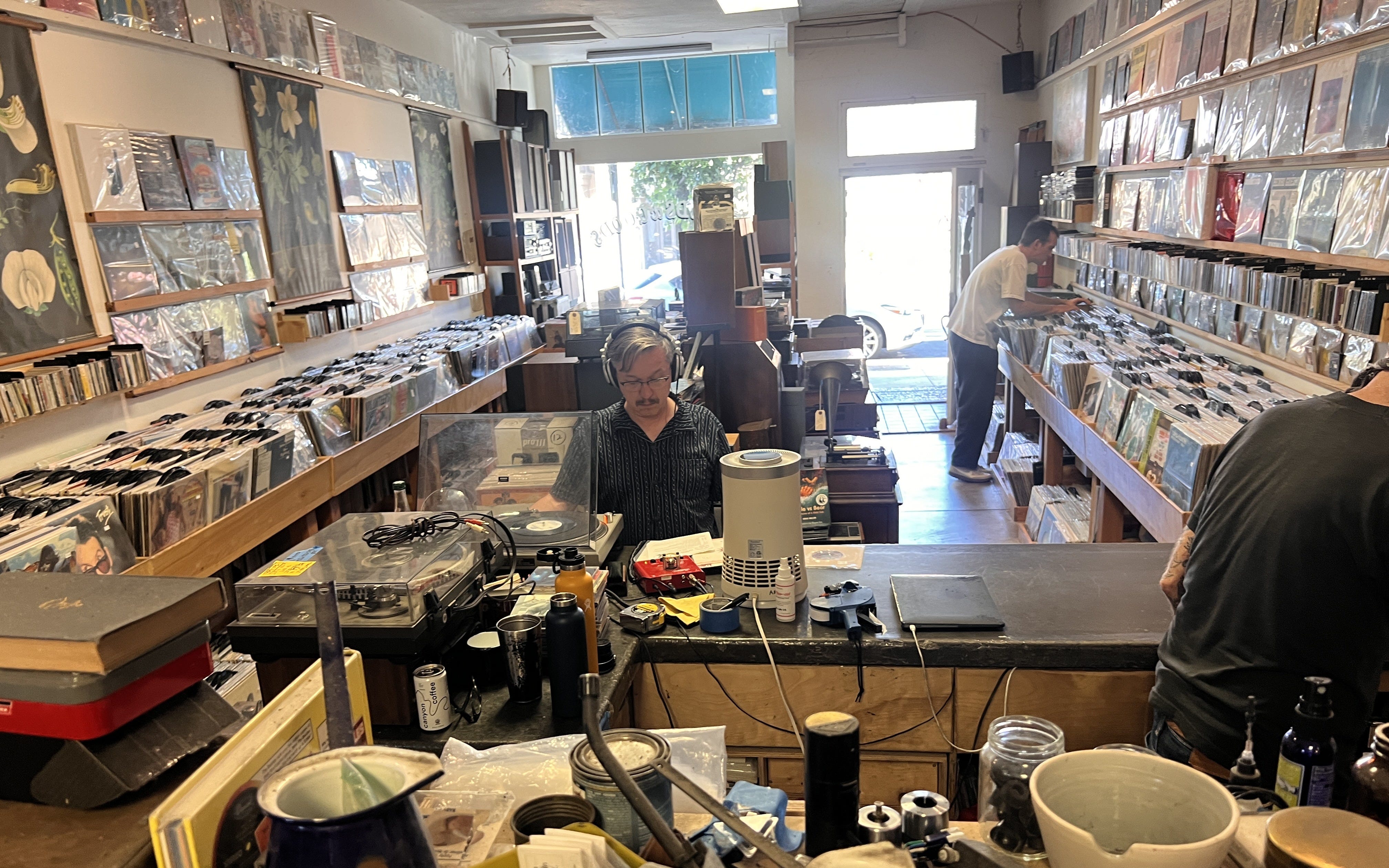
If you are ever in Santa Barbara, I recommend checking out Warbler Records & Goods. And if you are looking for some powerful reggae and dub music, check out LKJ.
I wished I knew you were coming to Santa Barbara! I would have enjoyed meeting you and showing you my collection. Please reach out next time you are in town.
I recently made two donations to UCSB, of about 1,000 or so 78’s from a collection I recently acquired. David Seubert gave me a tour and it really is a fantastic collection and resource here in our town.
Warbler Records is fun to browse and hear new music… I haven’t been there for a while.
Keep up the good work!
I wish someone would go to UCLA where there are 2 Mort Sahl shows (KTTV) and upload it on YouTube to save cultural history. I would even pay you for this. I just need the digital video file.